My Ricardo moment: from Dieselmax to Hydromax


Stepping onto the Bonneville Salt Flats for the first time in 2005 was like stepping onto a different planet. The blinding white salt and cloudless sky, both of which seemed endless. The ground crunching beneath our feet looked and felt like a crust of snow. But instead of freezing temperatures, we were hit by the typical dry heat of a Utah summer, with temperatures exceeding 35º C daily.
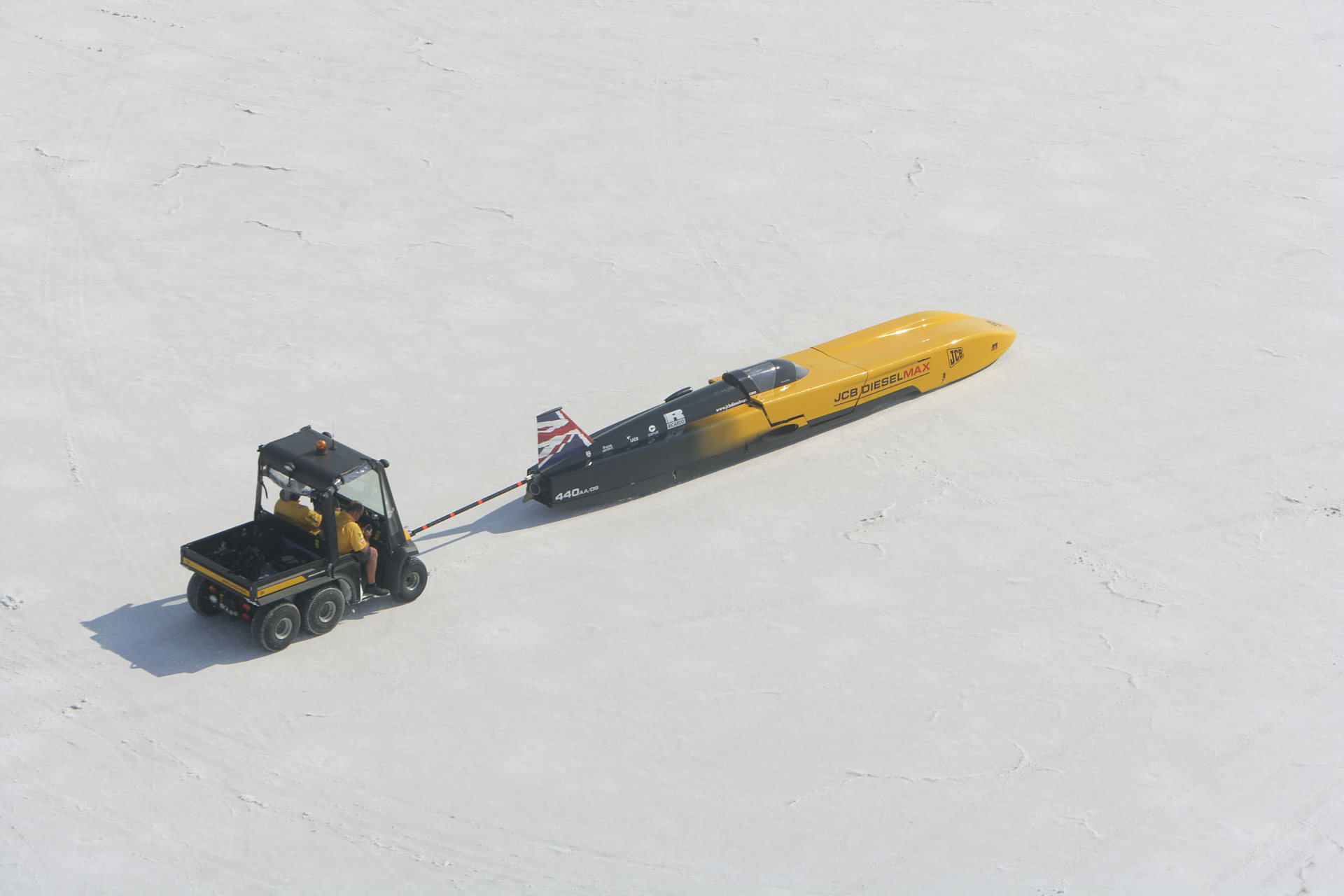
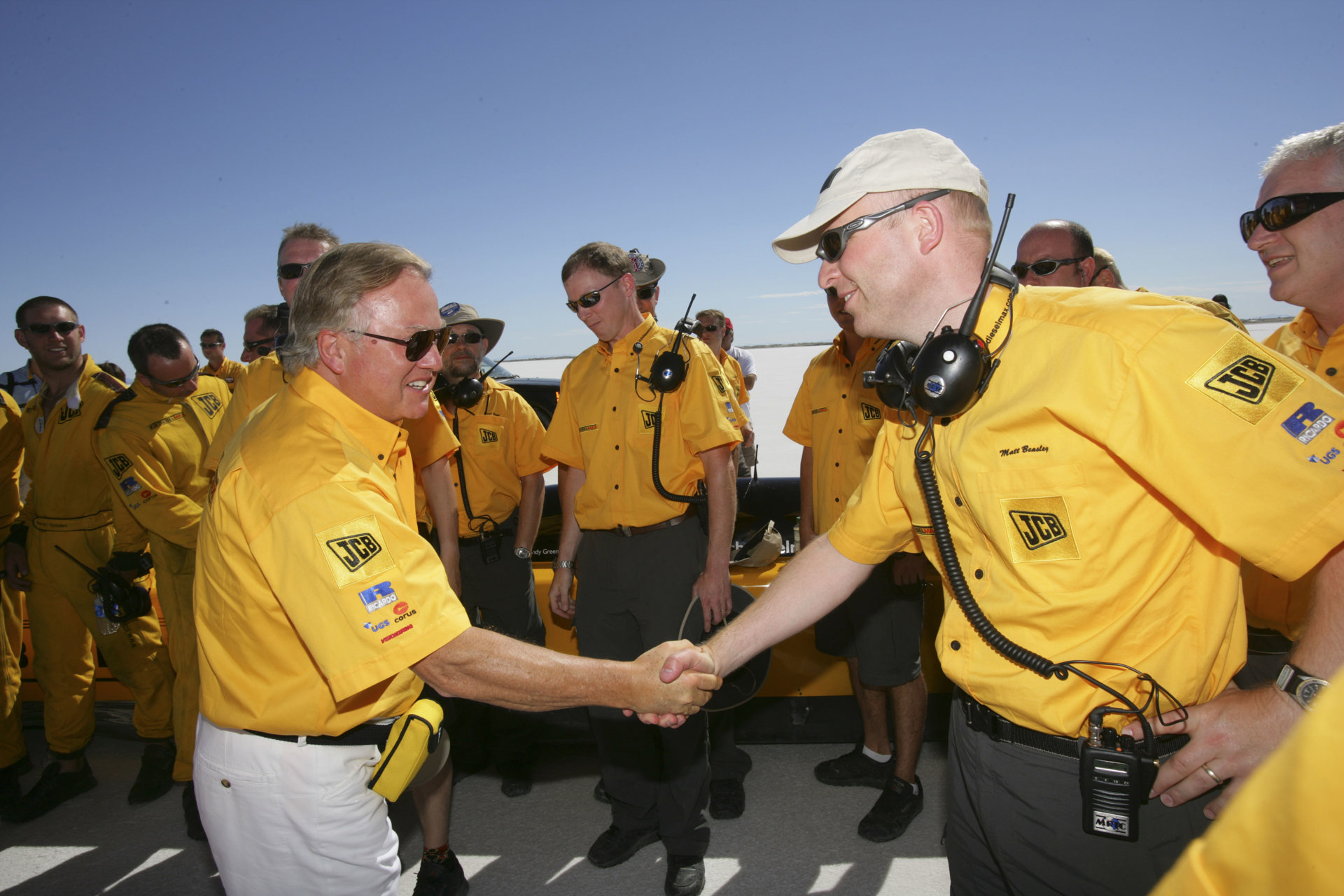
I had been with Ricardo for just under ten years when JCB approached us to support the development of JCB Dieselmax, which would become the world’s fastest diesel car. When JCB first put forward the idea of a world land-speed record, I didn’t think they were serious. But that notion changed the moment we stepped into our first meeting at JCB and saw former world land-speed record holder Richard Noble, aerodynamicist Ron Ayres, and current world land-speed record holder Andy Green sitting around the boardroom table.
We had recently supported JCB the development of their first in-house diesel engine, the “444”, but we now had just over a year to modify this engine to propel a car to speeds of over 350mph, with Ricardo responsible not only for supporting engine development but also for defining the vehicle concept and overall performance strategy. From a vehicle perspective, we needed to define a concept with the lowest possible frontal area and drag.
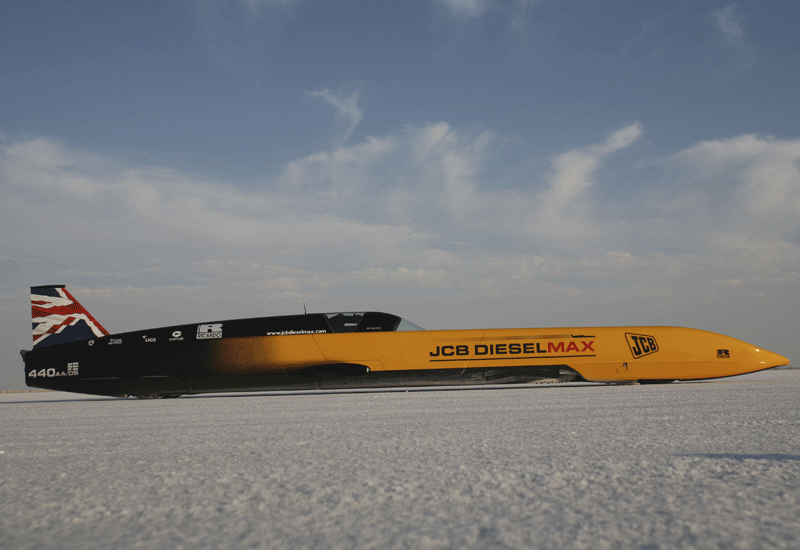
Early on it became clear that the car would not only need two engines – one at each end – but that these would need to be on their sides to meet the aerodynamic targets we’d set. The engines would also need to be uprated from 75hp to around 750hp, which would mean doubling their speed and increasing boosts level by around five times, all whilst somehow keeping them cool.
After 15 months of design, development, testing, building, and more than a few bags of ice – the solution to keeping the engines cool – we were ready to make the record attempt at Bonneville. Little can prepare you for the reality of operating a vehicle at that speed on the salt flats, we were making changes to the engines, vehicle and cooling system right up to the very last moment. Inevitably we all a had a sleepless night before the record runs thinking about all the ways that it might go wrong.
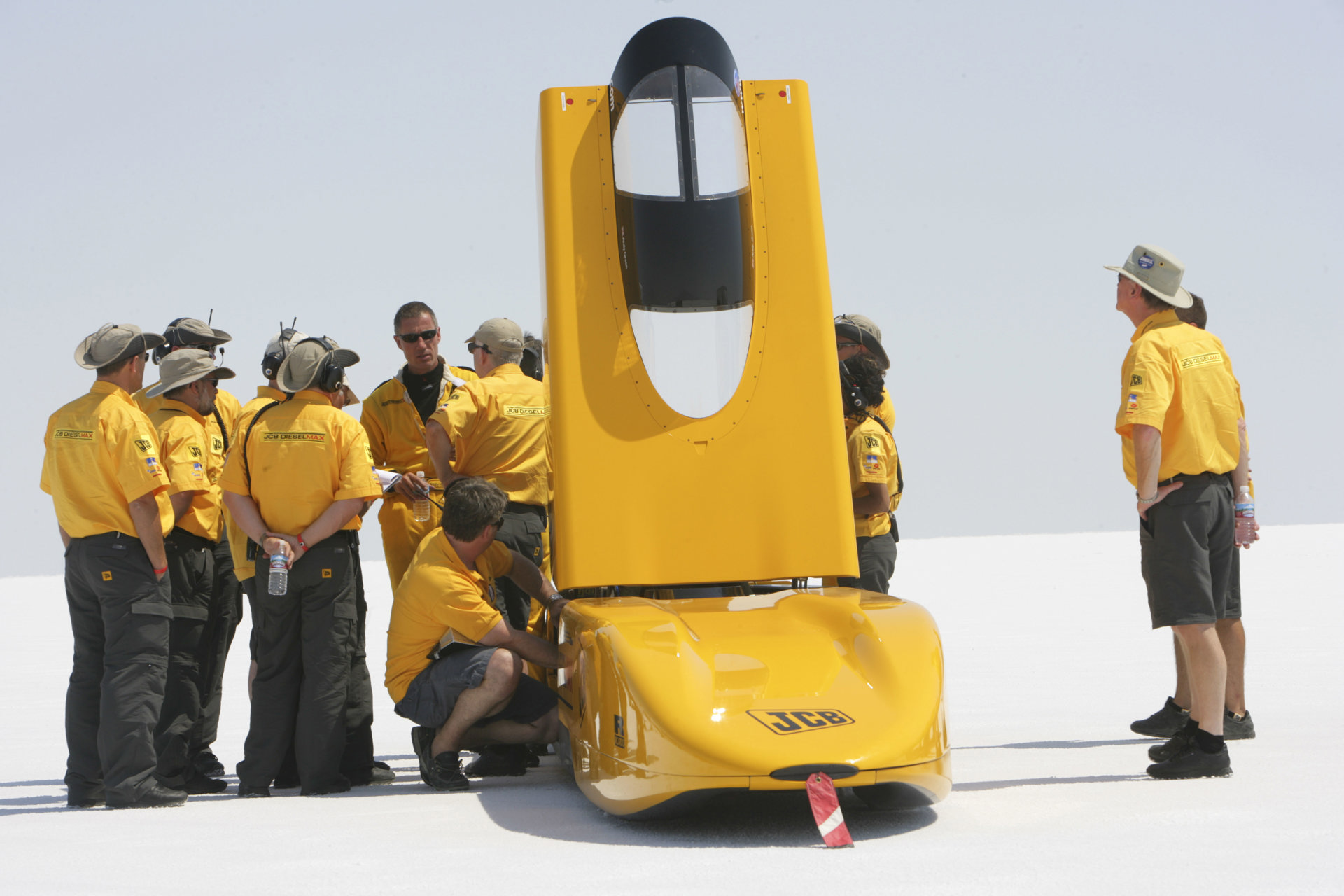
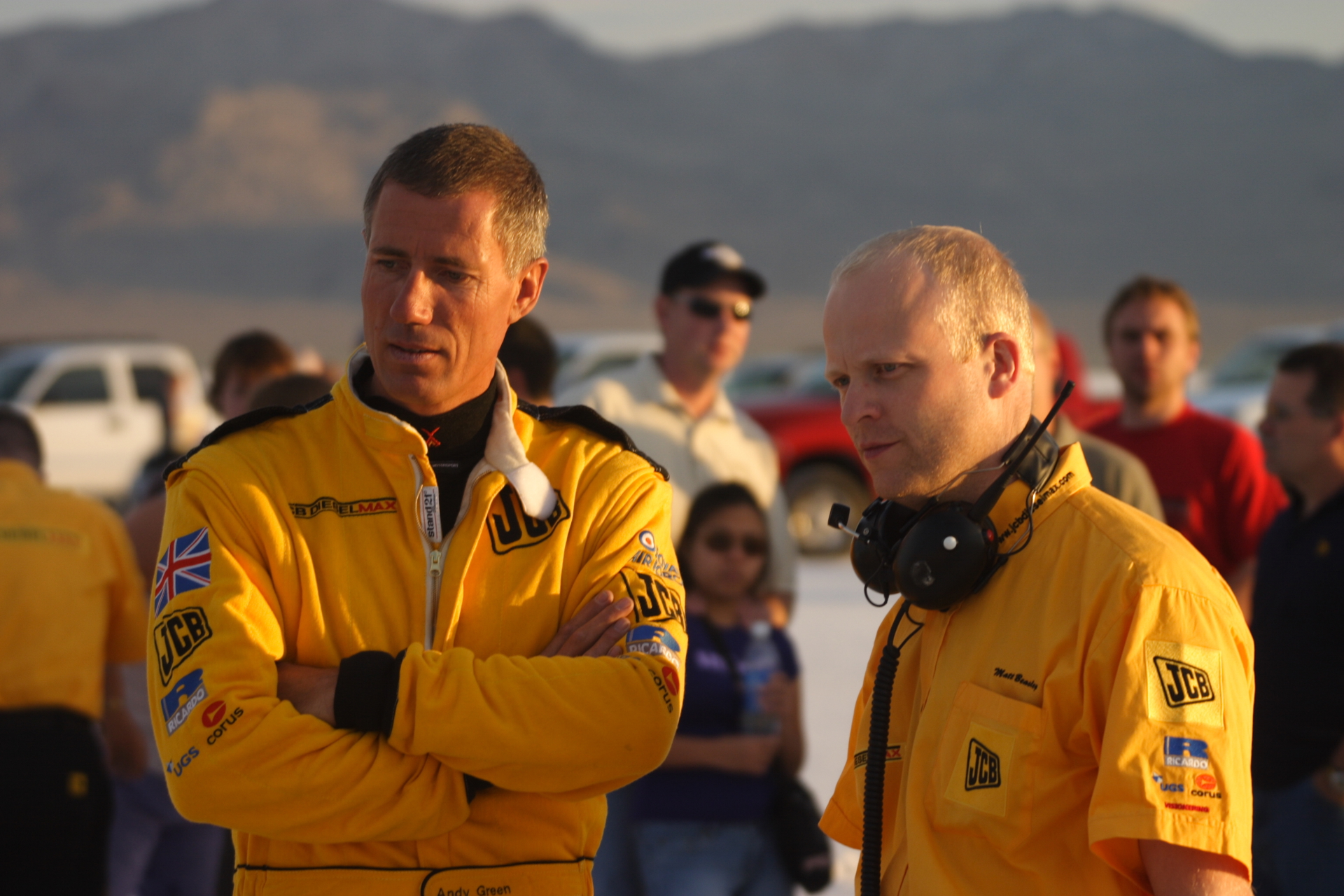
The feeling of relief, elation and satisfaction after watching Andy speed across the flats, in the vehicle we’d played such a key role in developing was immense. Together with JCB and the vehicle partner, Visioneering, we’d formed a world class team that had overcome hundreds of challenges along the way to setting the FIA world land-speed record for world’s fastest diesel vehicle.
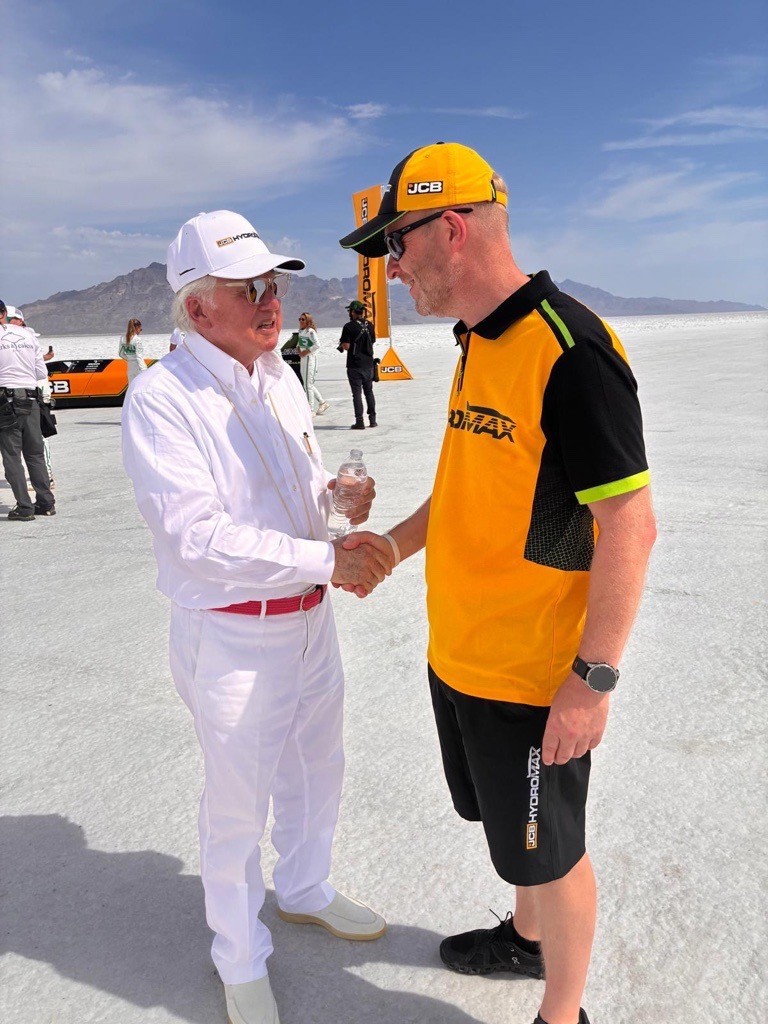
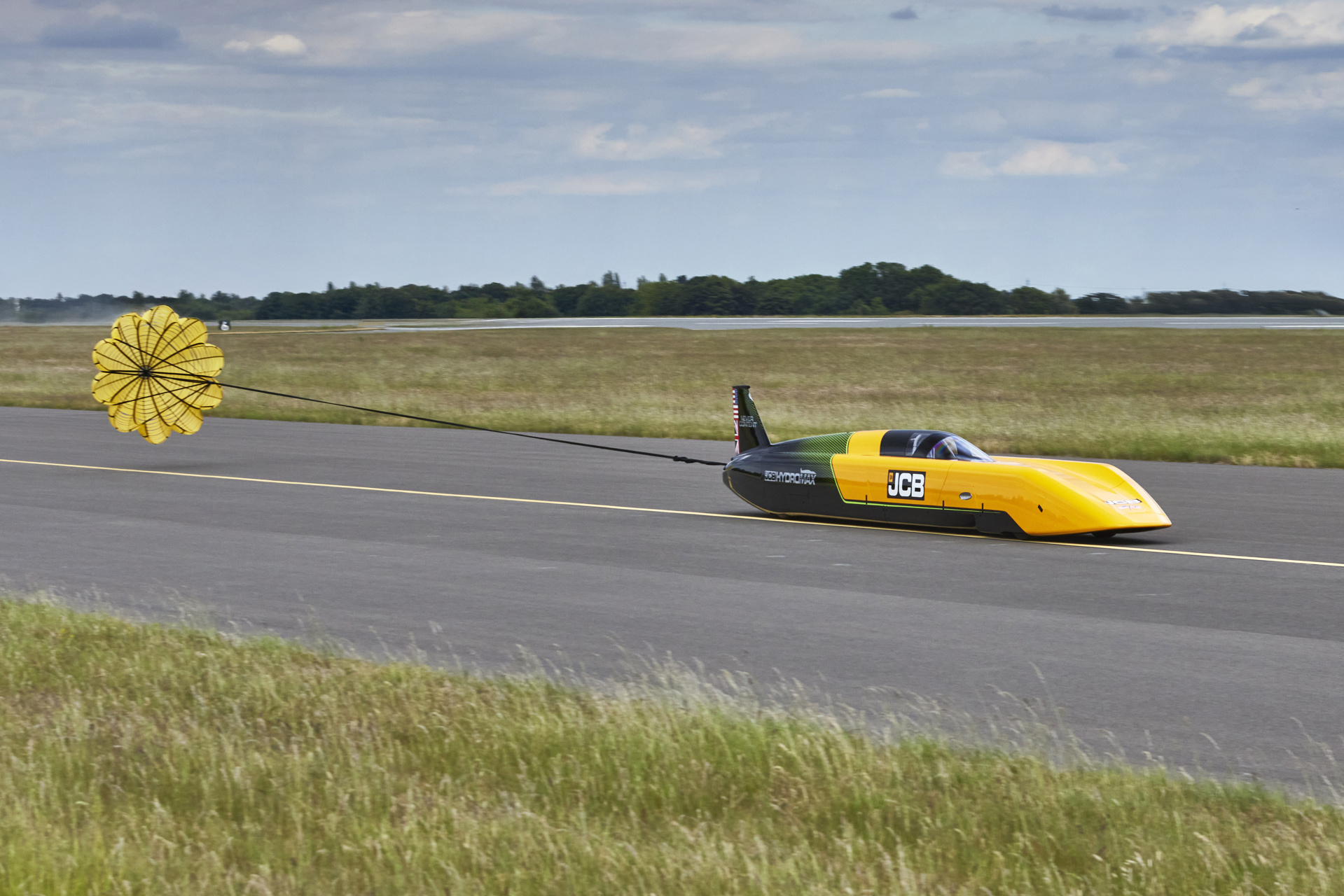
As the twentieth anniversary of Dieselmax inched closer, I was not entirely surprised when JCB approached us to let us know they might be going back to the salt flats. And when I saw the project code name – H2 – I realised exactly what we would be working with: hydrogen, the fuel used in JCB’s latest, innovative, production engine. This time we wouldn’t just be trying to beat the outright hydrogen land-speed record (303mph) or Dieselmax’s record, but we would be aiming to set a record over 400 mph, which in performance terms is a huge step up from 350mph. This goal was kept a tightly controlled secret until the record was broken.
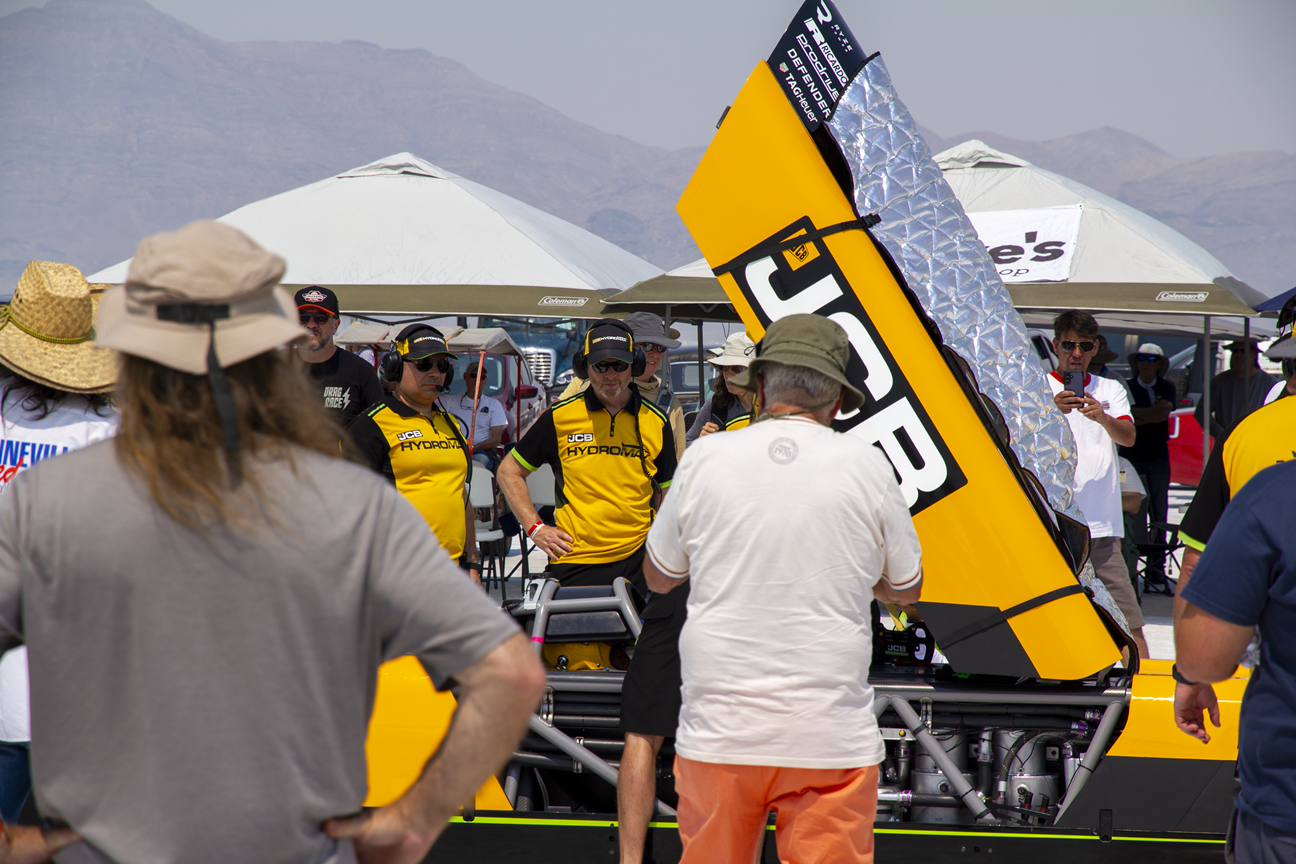
There were enough similarities between Dieselmax and Hydromax to make this feel like familiar territory. The vehicle twin engine architecture that we had defined for Dieselmax would remain in Hydromax, with engines laid on their side and the driver in the middle. Again, the record attempt would take place in Utah with Andy Green once again the driver. Several of the Ricardo faces remained the same too (such as Richard King and Richard Cornwell). As before, we had to uprate the engines by a factor of ten or more and, once again, the time frame was very tight – a little over 12 months on a project to which you would like to dedicate two years or more.
As with Dieselmax, we set to work immediately, establishing teams of experts from across Ricardo (around 80 overall supported the project) to help with the design, modelling, build and testing of the 800hp hydrogen engines and their systems – which was our focus on JCB Hydromax.
Our prior experience from Dieselmax, combined with our own research and development on hydrogen engines meant that we were in an ideal position to support this project. Early, rapid modelling of the engine and its systems was key – enabling us to take informed decisions at pace and progress rapidly to hardware procurement. Looking back at it now, it is impressive how accurate those simulations were. This really shows how far things have come on in the last 20 years: we can now use the simulation in a “right first time” approach, enabling a programme to run as fast as this. In addition, additive manufacturing (3D printing) has enabled us to design and rapidly procure parts we could not have had 20years ago – such as a complex inlet manifold with fully integrated water injection rail and injector mountings.
We arrived in Bonneville a week before Speed Week – the world’s premier straight line racing event. We had only a couple of hours to take in the spectacle of the salt flats before we needed to get down to work. Over the next week, we worked with Andy, JCB and Prodrive on testing and developing the engine in the harsh Utah environment, a place whose chemistry and altitude cannot be fully factored into modelling or our Ricardo test beds.
I didn’t think I would ever again feel that mix of relief and elation that I had with Dieselmax. But I was wrong. Watching Hydromax speed past at 400mph felt like a full-circle moment. We had done it again. Securing the FIA record, the record for a hydrogen vehicle of any kind and we broke the JCB Dieselmax record.
Of course, it wasn’t all easy going. We had many late nights and long weeks overcoming many Engineering challenges. There were several engine failures, both on the test bed and one during vehicle tests, rapid redesigns and overnight fixes required, and plenty of doubt. But, as with Dieselmax, we had a committed team of passionate and highly skilled people who had the determination and drive to make this happen.