


The Engineering Challenges of GT3 Gearbox Design


During a 24 hour endurance race such as Le Mans, GT3 cars cover around 4,600km [1]. For comparison, a typical passenger vehicle in Europe drives approximately 10,800km per year [2]. So, a single day of GT3 racing equates to nearly half the entire annual mileage of a roadcar. But unlike road use, GT3 cars complete this distance at racing speeds of up to 300km/h [3], whilst enduring over 4,000 braking events [4] and countless sustained cornering loads. The sheer brutality of endurance racing cannot be underestimated.
‘GT3 is a category that is often described as customer racing, but in reality, it is endurance racing under the harshest operating conditions,’ reveals Connor Murray, Motorsport Sales Lead at Ricardo. ‘When using racing as a proving ground to validate components, nothing comes close to the distances travelled in endurance championships, so surviving that is the biggest challenge. GT3 cars also need to cope with multiple drivers and their different driving styles, balance of performance restrictions and the varying characteristics of racetracks around the world.’
Why robust components matter in GT3
In the higher categories of racing such as Hypercar, larger budgets and more freedom within the regulations allow engineers to overcome the challenges of endurance racing through innovative materials and bespoke component design. Whereas GT3 championships don’t have this luxury. Not only are the regulations more restrictive, but GT3 cars are derived from roadcars, so although they are engineered for increased performance, they are still based on a homologated production model, yet must endure the same harsh racing environments as purpose-built Hypercars.
For example, the aerodynamic package of a Hypercar is specifically developed for racing from the outset, whereas a GT3 car’s aerodynamics are dictated by the original road car silhouette. Consequently, features such as the underbody can be fully optimised to maximise downforce, adding significant aerodynamic performance to Hypercars when compared to GT3.
Furthermore, the regulations allow Hypercars to run carbon brake discs, which have a higher thermal capacity and resistance to brake fade and lower unsprung mass. While the GT3 regulations only permit cast iron or steel brake discs which are not only heavier but wear faster and generate more heat.
‘The goal of GT3 championships is to achieve a level playing field across a variety of different shapes, sizes and complexity of racecar,’ explains Murray. ‘This is why the governing bodies implement a strict Balance of Performance [BoP]. This can include adding ballast, limiting the amount of fuel onboard, raising ride heights and reducing turbo boost or using smaller intake restrictors for naturally aspirated engines.’
‘GT3 teams have a very narrow band of performance in which they are allowed to operate in and so cannot really engineer additional gains,’ continues Murray. ‘This combined with limited budgets means that components, such as the gearbox, need to be designed to be extremely robust and reliable right from the outset.’
The technical demands on a GT3 gearbox
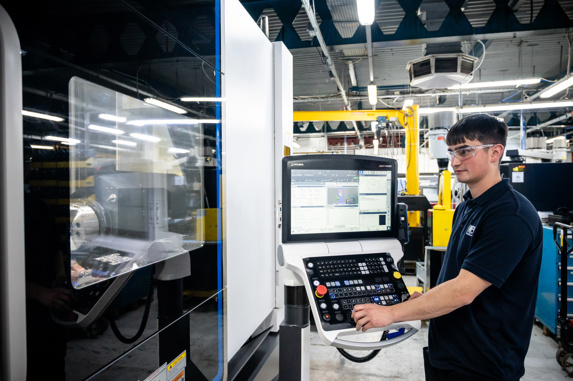
During a 24 hour race, the transmission needs to deliver around 20,000 crisp, efficient and fast gear shifts [5], regardless of increasing temperatures, relentless vibrations and different shift behaviours from multiple drivers.
‘When drivers are battling for position, overtaking traffic or driving in night conditions, they are not always fully focussed on changing gear at the precise time to ensure an optimum shift,’ says Murray. ‘In general, there is little mechanical empathy for gearboxes and yet they are still expected to perform consistently throughout the race, under all circumstances.’
Achieving reliable gear shifts also helps boost driver confidence. A gearbox that starts the race with crisp gear changes that gradually deteriorate over time can be a headache for drivers as they must switch their attention from racing to managing the gearbox. Whereas, a transmission that executes consistent gear shifts, lap after lap, allows the driver to trust shift performance, even after 24 hours.
A proven GT3 transmission partner
Ricardo has supplied gearboxes to GT3 teams for the last 15 years, across every major GT3 and endurance championship. Throughout this time, Ricardo’s engineers have acquired a deep understanding of the technical and operational requirements necessary to deliver high performance GT3 gearboxes.
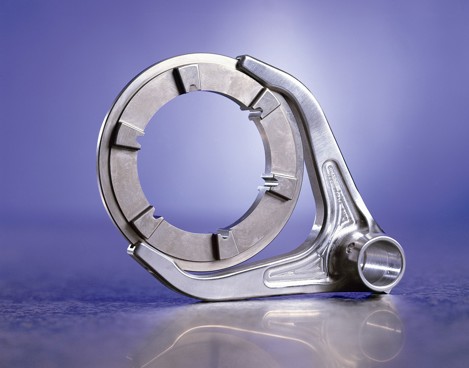
For example, Ricardo has developed a cost-effective standard GT3 gear cluster that can be repackaged to suit specific installations. This allows customers to benefit from the performance and reliability of a Ricardo transmission, without compromising the stringent packaging requirements of a GT3 racecar.
‘Success in GT3 is not defined by peak performance, but by cars that cross the finish line,’ concludes Murray, ‘Reliability really is king, and that’s why the most effective gearbox is often the one that no one talks about, because it never causes any problems.’
‘We strive to develop transmissions that are so dependable, irrespective of race distance and conditions, that once set-up, they work seamlessly in the background and can effectively be forgotten about,’ adds Murray. ‘Engineers should no longer need to compromise race strategy because of the transmission.’
References
[1] J.B., 2025. Le Mans 24 Hours Post-Race Data Debrief [Online]. GT Report.
[2] 2025. Change in distance travelled by car [Online]. Odyssee Mure.
[3] 2025. 2025 24 Hours of Le Mans – Presentation of the LMGT3 category [Online]. 24H Le Mans.
[4] D.H., 2025. The Challenge of Keeping Brakes Cool at Le Mans [Online]. Racecar Engineering.
[5] 2021. Race of extremes: 28 million sparks and 20,000 gear changes [Online]. Porsche Newsroom.



Got a question about this article? Contact us here
Can't see this form? Email us here