


It's green light for next wave of battery technology in high performance vehicles


Advanced modular battery technology (AMBERS) continues to make hybrid powertrain adoption easier and more affordable across high performance applications. Ricardo’s innovative AMBERS programme is supporting this drive.
Dr Temoc Rodriguez, Ricardo’s Global Technology Lead for battery development, tells us more.

Q: Tell us more about the drive towards hybridisation in motorsport and high performance vehicles?
"This move is being driven by multiple factors, including a more conscious approach to the environment, but also the evolution of electrification and hybrid technologies to improve performance levels over traditional propulsion systems.
"Innovation has always been at the forefront of motorsport and high performance vehicles, with many of these technologies filtering down into mainstream applications. However, the switch to electrified propulsion systems has been slower to catch on.
"Nonetheless, things are changing, in part due to more advanced battery technology and electric drives, leading hybrid vehicles to deliver instant torque, high energy efficiency and advanced energy management.
"Although, we’re still a long way from parity across motorsport classes."
Q: What are the main challenges to wider adoption in motorsport applications?
"Cost is one of the biggest factors shaping decisions in motorsport, and has been a barrier influencing the wider adoption of battery technology in the industry.
"If you take the pinnacle of the motorsport industry, Formula 1®, the teams are investing huge sums of money in technologies to remain competitive and meet aggressive vehicle targets.
"This compares to the other race classes, who have significantly less money to invest. It doesn’t mean that they are less inventive or innovative, but the reality is that they have to manage their budgets in a way that prioritising more off-the-shelf components as opposed to bespoke, or even clean sheet designs.
"This is one of the main reasons why different classes of motorsport haven’t witnessed more rapid hybridisation."
Q: How does AMBERS offer a solution?
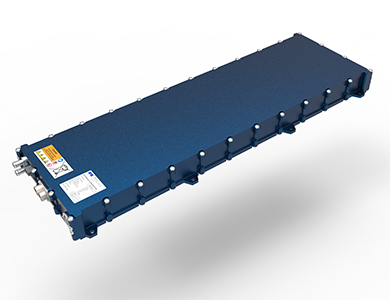
"AMBERS (Advanced modular battery technology) is a platform that has been developed and designed to provide high performance power for hybrid powertrains across all race classes, where something off-the-shelf is needed, without compromising performance.
"Ricardo has developed AMBERS as part of a consortium, alongside battery assembler Hyperbat and cell supplier Volklec. The design is Ricardo IP, we own the architecture and can modify it based on individual customer requirements if required. However, it’s been developed as a modular platform, with the intention to make it off-the-shelf and available by the end of 2028.
"The modular design lends itself to modifications, including the number of modules in the pack, to fit customer requirements more closely, based around voltage, power and energy, so it’s fully scalable.
"It provides a solution, without the need for teams to pay the design, development and test related costs of something bespoke."
Q: What are some of the technical specifications of AMBERS?
"AMBERS is designed to operate across high performance platforms. The pack itself will give users very high current discharge, which supports rapid acceleration and regenerative braking. It’s enabled with a clever integrated thermal management system and it’s also modular, making it fully scalable, based on customer requirements.
"Very few off-the-shelf comparisons can be made, based on design, integration and performance capabilities.
"In terms of baseline design, performance levels will be dependent on the battery cell that is installed, which will enable performance at a reasonable price. The more powerful the cell, the more expensive the unit becomes. That’s the customisable aspect of AMBERS; cells can be chosen based on the power and cost requirements of the customer – yet the architecture remains the same. Companies can buy AMBERS as an off-the-shelf kit and integrate it into their racing vehicles.
"There’s also an opportunity for parallel applications, including in niche and boutique vehicles, both hybrid and fully electric."
Q: What are the next steps for AMBERS?
"We’ll have the first prototypes available in 2027, then production is planned to start by the end of 2028, which fits with planned design and development cycles associated with these markets.
"Beside the advanced thermal management system, one of our key differentiators will be in our management of the wireless communications in the unit, allowing the sensing electronics to talk to the control module more easily. This eliminates the need for low voltage harnessing. We’ve also looked at how we can improve the BMS system, using artificial intelligence estimation algorithms."
Temoc will be presenting on the AMBERS programme at the upcoming PMW Expo on 11th November 2026 in Cologne, Germany. To learn more you can also visit the Ricardo stand 3072, and talk to the team directly.


Book a meeting with Dr Rodriguez at PMW Expo
Can't see this form? Email us here