


Transmission efficiency in the hybrid and electric era


Over the last 20 years electrification in motorsport has evolved from the 2006 debut of the first hybrid system in the Denso SARD Lexus GS 450h [1] to the widespread adoption of hybrid and electric powertrains across the top tiers of racing. Today, there are 8 major international championships powered by hybrid and electric technology [2], along with hundreds of national, regional and club-level categories.
However, hybrid and electric powertrains demand different characteristics from the transmission than traditional internal combustion engines. Therefore, mastering the optimum delivery of torque from the engine as well as regenerative motors to the wheels has become a key performance differentiator in modern motorsport.
The role of transmission efficiency
In a hybrid powertrain, the gearbox needs to blend torque from the engine with torque from the motors which is typically achieved with either an automatic or Dual Clutch Transmission (DCT). Whereas the motors in an electric powertrain provide consistent torque and so can utilise a single speed gearbox. However, in racing the most efficient and lightweight solution is either two motors back-to-back with an epicyclic reduction unit outboard on either side, or a parallel axis arrangement where a single motor drives the front wheels, and the torque is split via a differential.
All three gearbox concepts need to be extremely efficient to minimise losses and ensure that every joule of energy from the engine, battery or regenerative motors is converted into on-track performance. ‘However, there is a slight difference in the priority of efficiency between hybrid and electric racecars due to the regulations,’ highlights Steve Blevins, Head of Engineering at Ricardo. ‘In fully electric series such as Formula E, the total battery capacity is restricted, so teams start the race with around 25% less energy than they need to complete it. Therefore, alongside energy recovery, Formula E teams need to convert as much energy from the battery into torque at the wheels, which is only possible with a highly efficient transmission.’
‘Whereas in hybrid championships, the power from the engine and hybrid system are often capped by regulation,’ continues Blevins. ‘This is measured by strain gauges mounted to the driveshafts, so the priority shifts to maximising the efficiency of components outboard of the driveshafts such as the wheel bearings and brakes, rather than the transmission.’
Although efficiency might not be the first priority in a hybrid racing transmission, durability is. ‘The discussions in hybrid categories are no longer around the absolute output power of the hybrid system, but more about having a reliable source of energy deployment throughout the course of a race,’ reveals Connor Murray, Motorsport Sales Lead at Ricardo. ‘This of course brings transmission performance to the forefront, but more in terms of robustness and reliability whilst still hitting weight targets. So ultimately, the importance of transmission efficiency depends on the regulations and when and where the output power is capped.’
Hybrid and electric gearbox load profiles
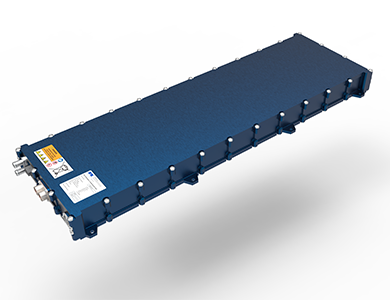
The deployment of torque from an electric and hybrid powertrain subjects the transmission to very different load profiles when compared to an ICE. In an ICE, the driver predominantly uses the friction brakes to slow the car down, rather than the driveline. Whereas in hybrid and electric cars the driveline provides the majority of the vehicle's braking torque through regenerative braking.
For example, Formula E cars used to rely exclusively on regenerative braking at the rear with only friction brakes at the front. The switch to four-wheel drive in season 11 now means that energy can be recovered from both the front and rear axles. With a higher braking demand at the front axle due to weight transfer, the front driveline has become the primary source of braking torque.
‘Consequently, the front driveline unit experiences more overrun and torque than it would do in a conventional ICE engine,’ comments Blevins. ‘This transmission load profile is essential for us to understand because it is so different to legacy ICE gearboxes.’
‘During overrun, the forces transmitted through the crown wheel and pinion substantially change the loads on the elements within the gear case,’ adds Blevins. ‘The bearing load direction also changes which in turn affects not only the bearing solution but the case stiffness too. Then there is lubrication, generally we lubricate the drive side of a set of gears, but if the unit is frequently in overrun, the non-drive side has to be lubricated efficiently and effectively as well.’
Balancing efficiency and durability requirements
Motorsport components must deliver high performance whilst remaining lightweight, highly efficient and capable of enduring the brutal operating conditions of racing. Balancing this trade-off between efficiency and durability is fundamental to being successful in motorsport. However, achieving this balance is becoming increasingly challenging as regulations continue to extend the life of parts to reduce costs.
‘When designing a transmission, the starting point is understanding how long it needs to last,’ highlights Blevins. ‘With championships reducing the number of gearboxes allocated to each team per season, the duty cycle increases significantly, placing greater emphasis on optimising this compromise between performance, weight and durability.’
Typically, regulations stipulate that gearboxes must be sealed throughout the season, so if one needs to be opened to repair faulty or damaged components, teams are hit with substantial grid penalties. ‘Our gearboxes must meet this increased durability requirement on top of the usual design considerations,’ says Blevins. ‘Features like gear face widths can no longer be optimised solely for performance and be as thin as possible, because they now need to endure increased duty cycles. It’s one thing to design a gearbox for durability, but what you can’t protect for is on-track accidents which is why our gearboxes need to be even more robust.’
The value of Ricardo’s development approach
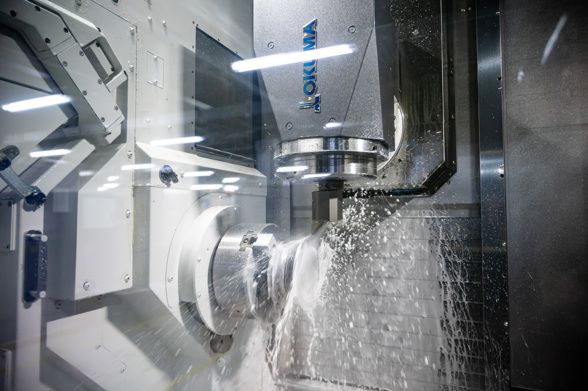
Striking the perfect balance between ultimate performance and extended durability requires a comprehensive design and development process along with a holistic approach. This is why Ricardo’s engineers are in constant communication with customers and other manufacturers.
‘The transmission forms only part of the driveline so it’s vital to test and optimise the whole assembly together,’ comments Blevins. ‘This requires a close working relationship with other manufacturers so we can understand the results from testing and then how to refine the design. Having that close and clear communication is the key to unlocking those marginal gains that are so critical for developing top performing transmissions in motorsport.’
‘You can design the most efficient gearbox in the world, but if you haven’t got the reliability that goes with it then it’s not fit for racing,’ concludes Murray. ‘It comes down to a fine balance between reducing the weight of the components whilst retaining their strength and durability. Understanding the intricacies of that balance and how it translates to on track performance comes from real-world experience, which Ricardo’s engineering team has built up over the last fifty years of supplying transmissions to high level motorsport championships.’
References
[1] G.G., 2020. Hybrid Heroes: The Cars That Brought Hybrid Drive To Endurance Racing, Part One [Online]. Dailysportscar.com
[2] Fédération Internationale de l'Automobile [Online]. FIA



Got a question about this article? Contact us here
Can't see this form? Email us here