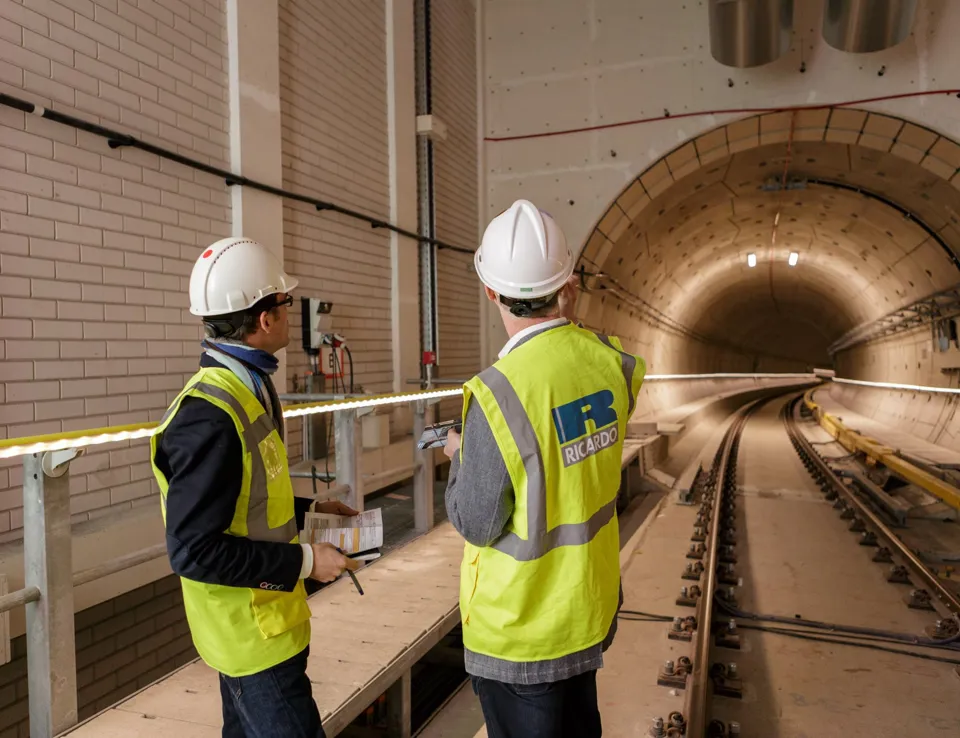


Trains are increasingly evolving into complex moving IT platforms


This blog post was written by the Rail Diagnostics & Digital Integration Team, which has long observed that trains are increasingly becoming moving IT platforms. In this article, the main focus is on signalling.
The integration of Information Technology (IT) into the development of all the systems of a new train poses a range of challenges.
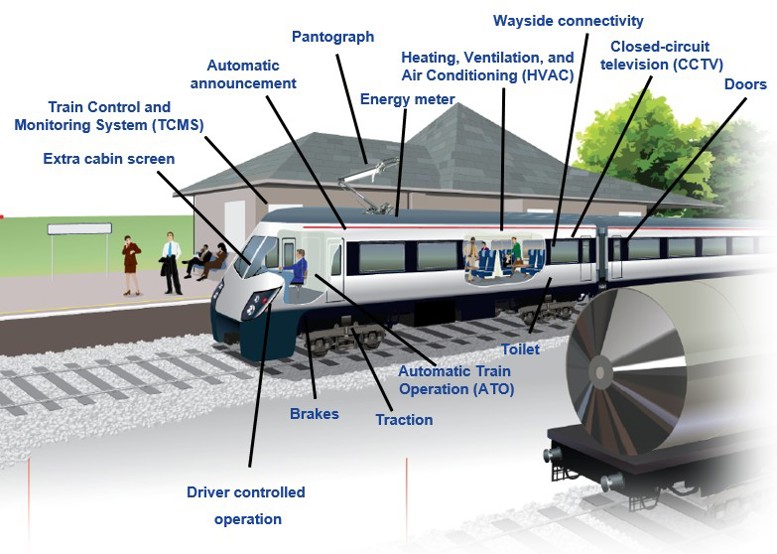
Figure 1: Examples of systems in and around the train
Main IT challenges
IT development functions differently from OT (Operational Technology) development. IT is typically developed and updated incrementally through a process known as baselines, in contrast to the more Systems Engineering-oriented approach of OT development.
By the time the first train prototype is ready, multiple software versions have already been released. All these software versions must undergo thorough testing before they can be put into production.
Moreover, the train's hardware and network architecture should be designed to be future-proof, enabling the implementation of new functionalities, such as Automatic Train Operation (ATO).
ERTMS and IT
One of the key systems is the ERTMS (European Rail Traffic Management System) train protection system. The implementation of the European Train Control System (ETCS) across various train series can be seen as a significant IT project. In IT development, it is crucial to ensure software quality throughout the development process. To achieve this, we continuously collaborate with the train manufacturer and the underlying system/software supplier during our projects. This includes both new train projects and retrofitting ERTMS in existing trains.
We place great emphasis on diagnostics, particularly regarding the truthfulness of information and the Train Control Monitoring System (TCMS). A high-quality diagnostic system is essential for assisting the driver in managing incidents and, for modern rolling stock, is vital for effective and efficient defect repair. We focus on several key aspects: reliability (is there actually a defect on the train?), completeness (are all defects being diagnosed?), unambiguity (does each report correspond to one defect?), and specificity (is the diagnosis report detailed enough?). Ricardo has assessed diagnostic quality for various customers, and based on these assessments, we have raised numerous cases of "false negatives" (no diagnostic notification in the event of a defect) with the supplier under the train warranty (diagnosis truthfulness).
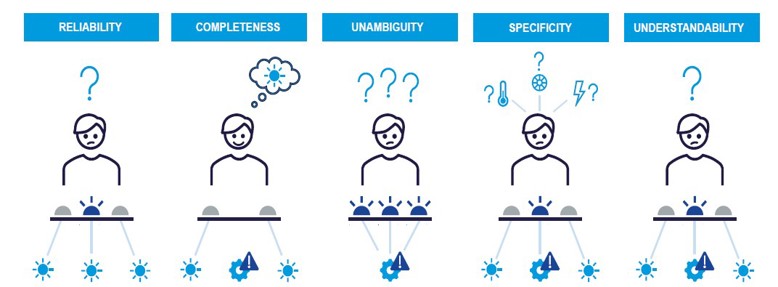
Figure 2: reliability, completeness, unambiguity and specificity
Configuration management and cyber security
Configuration management should also be properly secured. Which version of the software is running on which train? It still happens too often that this is not known at all during train breakdowns. So it is very important to properly monitor which software is running where and, just as important, to check that all data is passed on properly in the chain. In addition, it is very important that all systems and data can communicate with one another securely and be properly protected. Cybersecurity is thus an important aspect of IT in trains. We involve our clients in this too, so that they can implement ERTMS properly. We offer courses on this topic, which are well-received by clients.
Testing
Another important aspect of our IT focus is the necessity of frequent testing. Most testing occurs on the trains themselves, in workshops, or during test runs. However, our team members are collaborating with clients to explore the possibility of conducting more tests digitally using a virtual test wall instead of relying solely on physical trains. Full-scale test runs are costly and require careful scheduling. For instance, it becomes increasingly challenging to schedule a test run when a track section is temporarily out of service. Many software regression tests can, in fact, be conducted successfully through virtual testing.
Contact
Our Rail Diagnostics & Digital Integration Team continues to address various Signalling challenges. If you would like to exchange ideas with us about your challenges or developments in IT and rolling stock, please contact us:

Team Rail Diagnostics & Digital Integration


Signalling consultancy
Our signalling, control and communications specialists provide specialist technical support for clients throughout the world.
Rail asset renewals and upgrades
Specialist advisory and technical support services for complex, multi-discipline renewal programmes.