

Plans for a green shipping corridor between Newcastle and Amsterdam take a major step forward


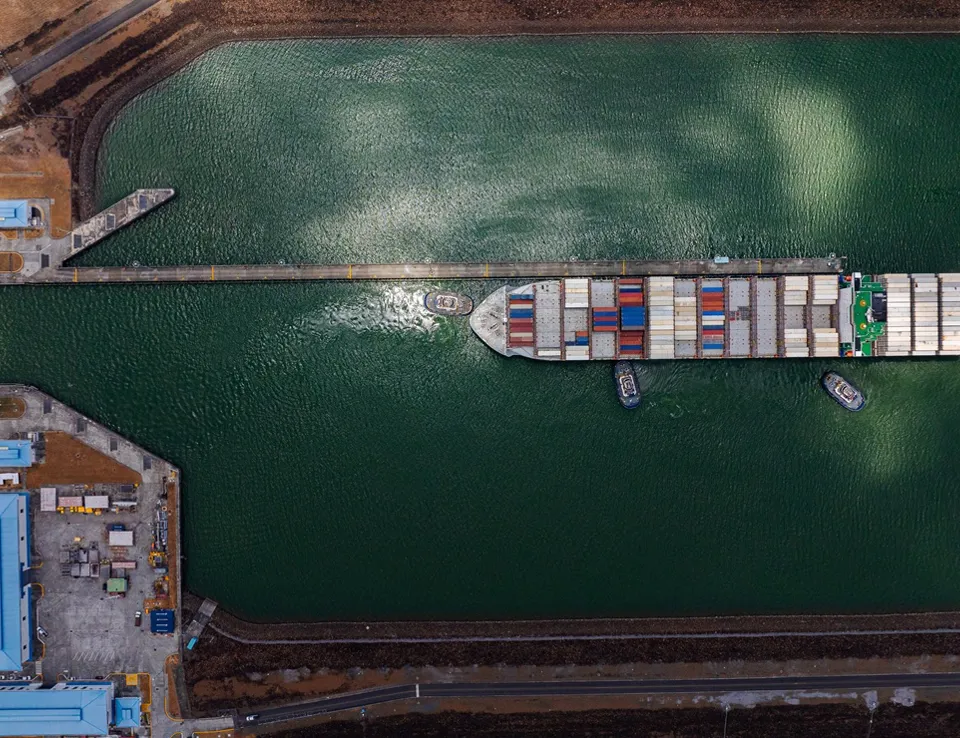
A new report, released today, has found that adopting methanol as the primary fuel for voyages between the Port of Tyne, Newcastle and Port of IJmuiden, Amsterdam could avoid up to £420 million in future regulatory costs and deliver an 80% reduction in greenhouse gas (GHG) emissions.
Green shipping corridors are specific routes where vessels use low-emission propulsion. The study, led by Ricardo, an environmental, energy and engineering consultancy and world leaders in maritime decarbonisation, assessed the technical and commercial feasibility of introducing a green shipping corridor between Newcastle and Amsterdam.
Looking at the potential of both methanol and onshore power supply as alternative future fuels for vessels operating between the busy ports, the study found significant reductions in emissions with the adoption of methanol, reducing GHG by 70%, and onshore power supply, reducing GHG by an additional 10-15%. Battery storage could also be adopted to support energy demand. The study also found significant financial savings, primarily through avoided regulatory penalties, which would help to offset any needed investment in new technology.
The report’s findings were validated by the primary ferry operator between the ports, DFDS’ own internal analysis, which supported the economic feasibility of transitioning the Tyne- IJmuiden route to alternative fuels. DFDS plans to invest in alternative fuel powered vessels for the corridor.
Ricardo Maritime Sustainable Transport Consultant, Matt Moss, said: “Green shipping corridors represent a viable alternative to traditional carbon-heavy fuels, in an industry that is considered hard to decarbonise. The Port of Tyne – Port of IJmuiden route is not only a suitable candidate for the world’s first green shipping corridor but will also inform similar projects throughout Europe.”
Port of Tyne CEO, Matt Beeton, welcomed the study’s results as another important step toward establishing a North Sea green shipping corridor: "We have a vision to achieve a net zero port operation, supported by an e-fuels hub, alongside a thriving ferry route to the continent for both passengers and freight. The transition to a cleaner future will only happen through genuine collaboration right across the maritime value chain. This report’s findings give us confidence that green shipping is within reach and that the North East can be at the forefront of the change."
Zeehaven Ijmuiden N.V. - Port of IJmuiden CEO, Tjeerd van der Voorn, said: “Transforming the Tyne–IJmuiden route into one of the world’s first green shipping corridors fits seamlessly with our ambition to develop Energy Port IJmuiden. This project has strengthened collaboration across ports, operators, engineers and public bodies, and the support of Innovate UK and the Netherlands Enterprise Agency has been instrumental. With methanol-powered vessels and onshore power, we are taking a decisive step toward a cleaner, future-ready North Sea connection.”
DFDS Amsterdam-Newcastle Route Manager, Teun-Wim Leene, said: “Our ambition is to decarbonise maritime transport along the Amsterdam–Newcastle corridor. This includes investing in new vessels and collaborating with partners to accelerate infrastructure development and the production of low-emission fuels which is crucial for a successful transition”
The Port of Tyne – Port of IJmuiden study was part-funded by the UK Government's maritime decarbonisation project programme UK SHORE, which aims to reduce emissions, fuel innovation and create new jobs in the industry.
Download the Executive Summary here.
ENDS
Background
In March 2022, the UK Government announced the biggest government investment ever in our UK commercial maritime sector, allocating £206m to UK SHORE, a new programme within the Department for Transport focused on decarbonising the maritime sector. UK SHORE is delivering a suite of interventions throughout 2022-2025 aimed at accelerating the design, manufacture and operation of UK-made clean maritime technologies and unlocking an industry-led transition to Net Zero.
The UK SHORE programme includes the flagship multi-year Clean Maritime Demonstration Competition (CMDC), which provides match-funding to help bring pre-commercial technologies closer to market readiness. CMDC5: IGCF allocated £1.5m for feasibility studies that examine green corridor routes between the UK and international partner countries between 2024 and 2025.
CMDC5:IGCF follows the successful first four rounds of the CMDC, which allocated over £128m to 138 projects. CMDC1 was launched in 2021, prior to UK SHORE.