

A year in review for the Greek energy sector - The era of complexity has arrived


The era of complexity has arrived
In 2025, the narrative of the Greek energy sector has shifted fundamentally. For the past years, the industry’s primary metric was speed, how fast we could permit, build, and connect gigawatts of renewable capacity. On that front, the sector has delivered. With solar capacity surging past 9 GW and renewables electricity shares much above European average, the capacity targets that once seemed ambitious are now in the rearview mirror.
But as we close the books on 2025, the market has entered a new, more demanding phase: the era of complexity. The challenge is no longer just about deploying steel and silicon; it is about navigating a bifurcated market where volatility is the norm, average prices are not showing the full picture, and the financial success of a project depends entirely on its interaction with a constrained grid.
The flexibility paradox
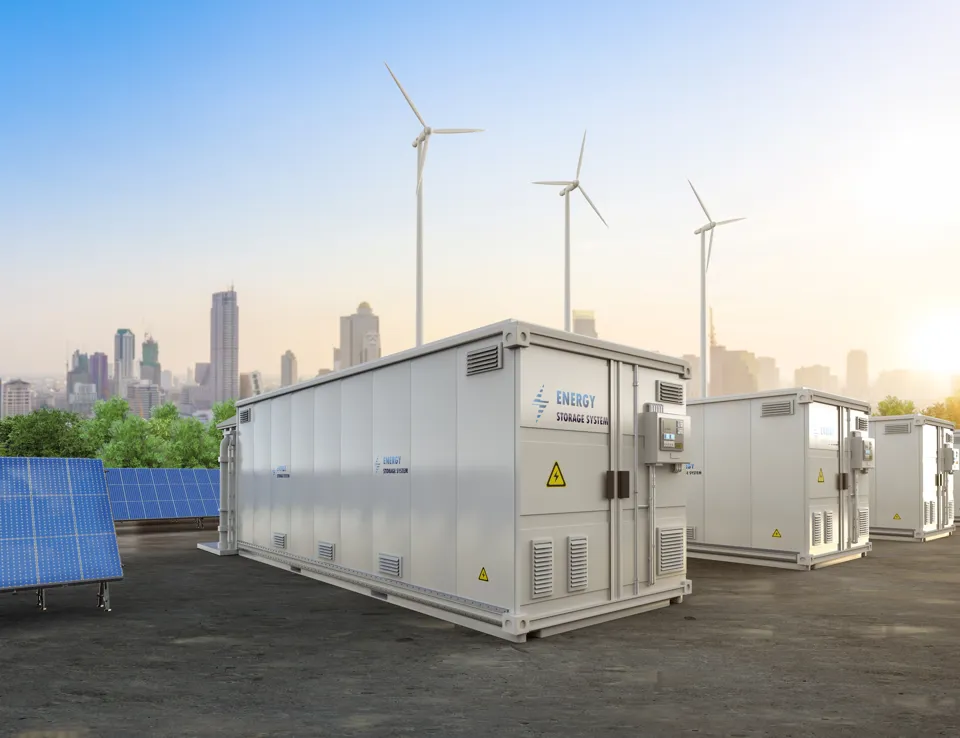
The headline story of 2025 is undoubtedly the acceleration of storage. The regulatory breakthrough establishing the Merchant BESS Priority Regime has unlocked a pipeline of over 4 GW, signaling a decisive move away from subsidies toward market-based revenues. However, for investors, this creates a dangerous paradox. Early movers in the storage space are able to capture significant value from the widening spreads between zero-cost midday solar and expensive evening gas peaks. Yet, as the storage pipeline converts to operational reality, these spreads will inevitably compress. The "cannibalization effect" is no longer a theoretical risk, it is a quantifiable certainty observed in our long-term forecasts.
For the uninitiated, this looks like a race to the bottom. But for sophisticated players, it signals a shift in strategy. The business case for storage is moving beyond simple arbitrage to revenue stacking; optimizing across energy, balancing, and reserve markets. The winners in this space will not be those who build the cheapest batteries, but those who have visilibity in the upcoming developments and those who will master energy management strategies and bidding behaviors across all available markets and time horizons.
The great divergence: wind vs. solar
2025 has also exposed a sharp divergence in technology economics. The unchecked growth of photovoltaics, while a victory for decarbonization, has led to a structural erosion of solar capture rates. With curtailments projected to triple, the "value" of a solar megawatt-hour is decoupling from the average wholesale price.
In contrast, onshore and offshore (when available) wind, due to their generation profiles which better align with system deficits, allow them to maintain healthier capture rates and defend their internal rates of return (IRRs) against the midday price collapse. This is reshaping portfolio strategies: the "set it and forget it" solar investment model is fading, replaced by a need for technology diversification and hybridization.
The need for detailed market intelligence
This new reality, where increased curtailment transfer risk to producers and price volatility breaks traditional “invest and forget” financial models, demands a new caliber of market intelligence. In a world where hourly dynamics dictate annual returns, using static annual averages and capture rates for financial planning is not going to work.
The complexity of 2025 requires "x-ray" vision into the grid, even for the near future. It requires understanding not just what the National Energy and Climate Plan (NECP) targets are, but what happens when the market deviates from them. What if storage builds out slower than solar? What if developments in neighboring countries affect cross-border flows and they don't materialize as expected?
Our analysis at Ricardo shows that these deviations are where the money is made or lost. For instance, a "storage-scarce" scenario creates windfall profits for flexible assets but punishes pure-play solar. A "high-gas-price" context creates paradoxically better revenues for market participants but burdens the end consumer and exposes the market to demand destruction.
Navigating the fog
As we look toward 2026, the Greek energy market is no longer going to remunerate symmetrically all market participants. It is a complex ecosystem of winners and losers. Success now requires granular, hourly-level foresight that can stress-test investments against multiple weather years, bidding strategies, and regulatory shifts.
The companies that will thrive in this environment are those that will be using market modeling insights such as those provided by Ricardo’s Electricity Market Outlook, as a core competitive advantage. They are the ones using scenario analysis to anticipate the bottlenecks before they appear on the balance sheet.
Greece has successfully built the hardware of the energy transition. Now, it must build the software, i.e the market design, the investment logic, and the appropriate asset management to make it work. In this era of complexity, clarity is the most valuable commodity of all.
About the Electricity Market Outlook
The Electricity Market Outlook is Ricardo’s one-stop-shop for electricity market intelligence, providing medium to long term electricity projections and robust insights, in the form of regular market reports, market outlooks and expert analysis.