

Renewable curtailments at 7% in 2025: Mounting pressure on Greek renewables and the case for storage


Analysis of the available data, collected and assessed by our Electricity Market Outlook team, shows that due to curtailments and other grid and market constraints, photovoltaic plants experienced revenue reductions of approximately 25%, while wind assets recorded more moderate losses of around 8%.
More specifically, renewable electricity curtailments in Greece rose sharply in 2025, reaching 7% at market level, more than double the 3.4% recorded in 2024.
Relevant results of our Electricity Market Outlook show that the majority of curtailments in 2025 were technical, driven by transmission system constraints imposed by the Greek TSO (ADMIE). A smaller share resulted from economic curtailments, linked to hours of zero or negative market clearing prices.
Curtailments for an average photovoltaic plant amounted to around 10% of theoretical generation, compared with approximately 4% for a typical wind farm, leading to the corresponding loss of market revenues.
Curtailments are only part of the revenue squeeze
Curtailments represent only one of several factors compressing RES revenues. Additional pressures arise from:
- Balancing responsibilities imposed on RES assets resulting by the above-mentioned curtailment, and
- The zero-remuneration clause from DAPEEP (the Operator of Renewable Energy Sources & Guarantees of Origin), which applies when market prices remain at zero for more than two consecutive hours.
The balancing cost burden for RES plants emerged primarily in the first half of 2025, as curtailments forced generators to rebalance their positions in the balancing market. This issue was significantly alleviated following regulatory changes introduced in early July, which linked imbalance prices to downward balancing energy prices during hours with curtailments.
Even so, balancing-related impacts are estimated to have led to additional revenue reductions of around 10% for photovoltaics and 4% for wind, costs that are borne either directly by producers or by RES aggregators (FoSE), depending on their agreed representation model in place.
Furthermore, the erosion of theoretical revenues due to consecutive zero-price hours clause is estimated at around 5% for photovoltaics and 2% for wind.
All estimations presented above are based on a representative RES plant operating under a Feed-in Premium (FiP) contract, assuming that curtailments are evenly distributed across all plants and proportional to their theoretical output at the time of curtailment. In practice, outcomes can vary materially between assets, depending on geographical location, grid topology and the specific curtailment criteria applied by ADMIE to safeguard system stability.
Looking ahead: 2026 and the role of storage
Electricity Market Outlook simulations, incorporating current market conditions and announced developments, indicate that curtailments are set to intensify further in 2026.
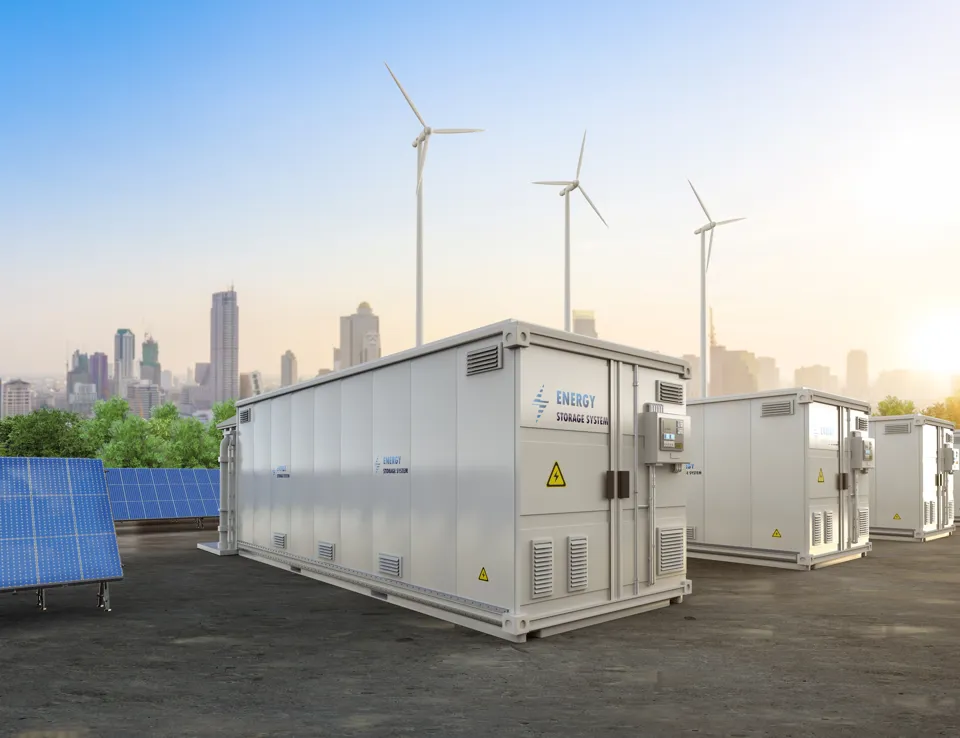
The extent of the curtailment will depend critically on the timely connection of the utility-scale storage projects pending in the pipeline.
About the Electricity Market Outlook
The Electricity Market Outlook is Ricardo’s one-stop-shop for electricity market intelligence, providing medium to long term electricity projections and robust insights, in the form of regular market reports, market outlooks and expert analysis.